
REMEMBERING HANK
Steinbrecher, a giant of a man and a giant of the game

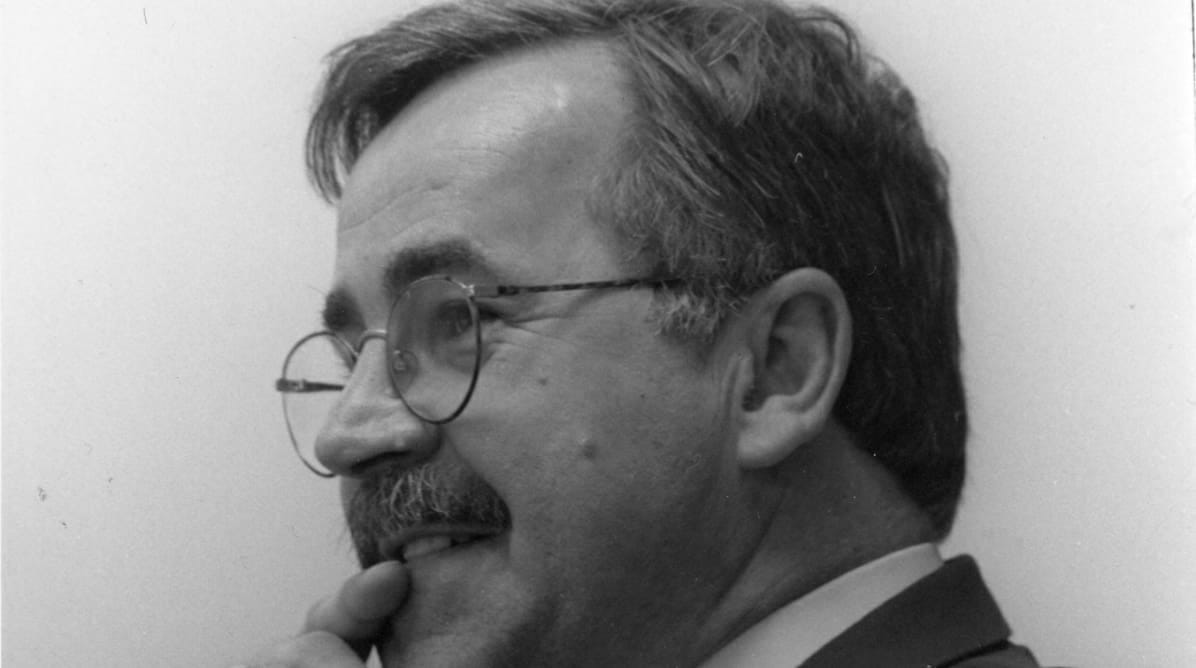
Hank Steinbrecher touched many individuals in U.S. soccer over the decades.
By Michael Lewis
FrontRowSoccer.com Editor
The first time I saw him, I must admit I felt quite intimidated.
Hank Steinbrecher was in a suit and tie and sporting a handlebar mustache that made him look like a villain in a Old West movie rather than the chief venue director of the Harvard University stadium in the Cambridge, Mass. during the 1984 Summer Olympics.
I needed to interview Steinbrecher for stories I was writing for Soccer America and Rochester Democrat and Chronicle about the Harvard venue.
Security was a priority to Steinbrecher. Teams were given police motorcycle escorts to the stadium. When teams flew into Boston from Annapolis, a helicopter sometimes followed the vans carrying them from Logan Airport.
"We do not want to live in infamy in Olympics history," he said then. "The massacre in Munich in 1972 occurred two days before the end. There's no way we're going to let down our guard."
The second meeting came at the Yale Bowl in New Haven, Conn. at a U.S. men's national team game in the spring of 1991. I don't remember the exact nature of our one-on-one talk, on and off the record, but we struck up a relationship that lasted decades.
It certainly didn't hurt that we had a common background. We grew up in neighboring towns on Long Island, Hank in Levittown, and me in Westbury.
We could talk on and off the record, mostly the latter.
If Hank didn't like a story I wrote, he would tell me, usually to my face, and sometimes, if he had the time, by telephone.
He also was quick to praise a story he enjoyed.
It turned into a two-way street. I wasn't afraid to voice my opinion to him about soccer in general or about the federation.
It was a professional give-and-take, something we don't see very much these days, especially in politics.
A mutual respect and a relationship were formed. I know I had a special relationship, perhaps not unlike what might have transpired between a reporter and the president of the United States decades ago. Not everything in conversation between us needed to be on the record. Sometimes it is important to listen and learn, understand to be educated.
Even after Hank left U.S. Soccer, he wasn't afraid to praise or criticize me, even in front of others.
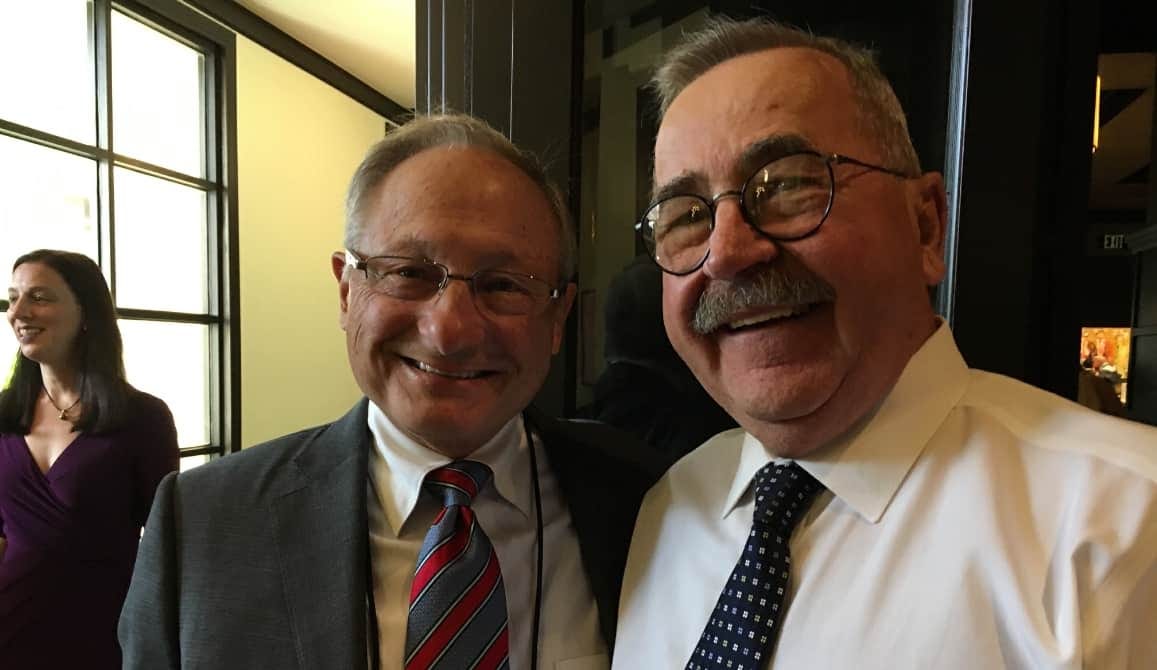
Former U.S. Soccer president Dr. Bob Contiguglia and Hank Steinbrecher at the NASL Reunion in Frisco, Texas in October 2018. (Michael Lewis Photo)
Much of what we spoke about never saw daylight in a story.
Except on what transpired in March 2000.
After I had traveled to Port of Spain, Trinidad & Tobago to cover the very first World Cup qualifying match for the 2002 competition in Korea/Japan, I wound up talking to Hank via a landline to the states (hey, this was before cellphones could be used internationally). Heaven knows what kind of bill I racked up at the time.
Hank wanted to talk to me about why he was stepping down as secretary general.
He was quite frank in the interview.
After nearly a decade of non-stop traveling and dealing with the complex politics of the U.S. Soccer Federation, Hank had to be reminded that even he had neared his limit.
Several months prior to his decision, Steinbrecher said that he was approached by his wife, Ruth Anne, and his two sons about his professional life.
"Hank," they told him, “You’re burning out."
It was time for a change.
I asked him what he was going to do with the rest of his life.
“I haven’t figured it out yet,” he told me for a story I wrote for CNN/Si.com. “Gone fishing. I love surfing. After soccer, that’s what I like next. My son Corey lives in Tucson and is a professional cyclist. I’ll follow his circuit on the weekends. I’ll be a cycling dad!”
By then, he had accrued more than three million frequent flier miles on one prominent airline alone, which would seem like a walk in the park to what Steinbrecher had to endure. He estimated he was on the road 42 weekends every year.
On one weekend in February 2000, he was in Philadelphia for the U.S. Youth Soccer Association workshop in Philadelphia on Friday, at the U.S. Amateur Soccer Association mid-winter meeting in San Francisco on Saturday and at the Concacaf Gold Cup final in Los Angeles on Sunday.
“That’ll sap you,” he said.
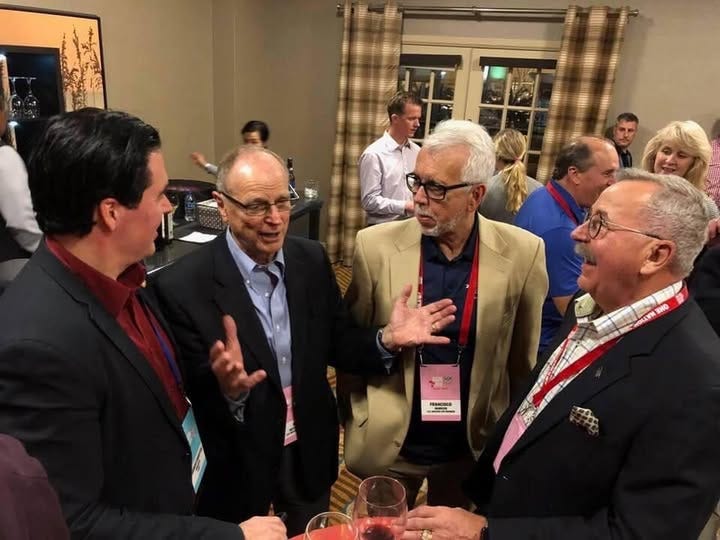
Former U.S. Soccer president Alan I. Rothenberg, United Soccer Leagues founder Francisco Marcos and Hank Steinbrecher. (Photo from Francisco Marcos’ Facebook page)
Steinbrecher insisted that politics had nothing to do with his decision. Over the previous year, Steinbrecher and U.S. Soccer had been criticized for failing to promote the sport, particularly the women's national team in light of it capturing the 1999 Women's World Cup.
He wound up at the eye of the storm during the sometimes-bitter contract negotiations between the federation and the women's team.
"I was positioned as a sexist," said Steinbrecher, who admitted he was hurt by those allegations. "I'm paid to do a job. I'm paid to represent the organization. We were negotiating with the women, and I was the target."
In the complex world of U.S. Soccer politics, you can become the target more times than you can count.
"It's politics in everything," he said. "It's no secret there are folks not happy with the leadership here. I'm a fighter.
"It's a different alligator every day. There are alligators everywhere."
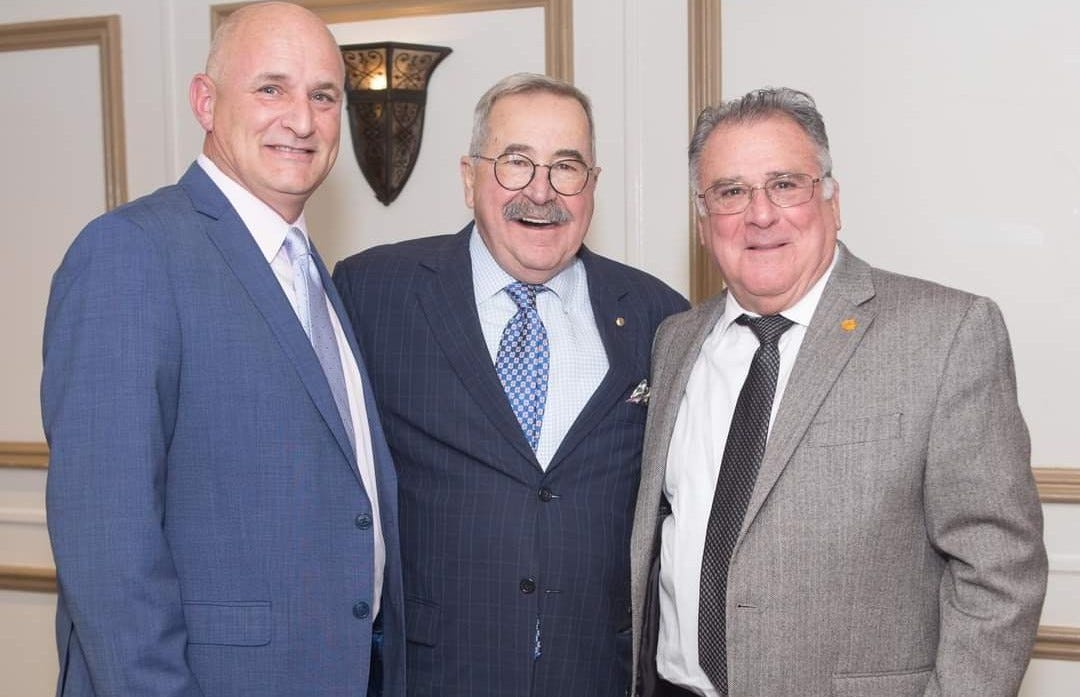
Met Oval Foundation founder Jim Vogt, Hank Steinbrecher and former LIU men’s head coach Arnie Ramirez. (Photo courtesy of Jim Vogt)
During Steinbrecher's watch, the federation moved from relative obscurity in Colorado Springs to a restored mansion in Chicago called U.S. Soccer House, the federation’s full-time staff more than tripled from 30 to more than 100 people. U.S. Soccer revenues jumped dramatically from $3 million to nearly $30 million a year.
I asked Steinbrecher what he regarded as his most important accomplishment with the USSF.
“Developing an infrastructure to support the national team programs is what I look back on with the most significant pride,” he replied.
I also got an opportunity to see Hank in action, things that weren't necessarily reported much in the media back in the day.
When the U.S. Under-23 team dominated and defeated Mexico, 3-0, in Bethlehem, Pa. on April 26, 1992, to clinch a spot in the Summer Olympics, Hank went up to every player in the locker room and shook their hand, congratulating them for their achievement.
Only seconds after referee John Jairo Toro Rendon blew the final whistle of the USMNT's triumph over Canada that clinched a berth in the 1998 World Cup at Swangard Stadium in Burnaby, British Columbia on Nov. 9, 1997, Steinbrecher found himself doing an unusual dance. He, along with head coach Steve Sampson, U.S. Soccer president Alan I. Rothenberg and future president Sunil Gulati, were wrapped in a circle at midfield at Swangard Stadium, performing a jig, while chanting, "Ole! Ole! Ole!"
Now, that was something you certainly won't see every day. Wish I had a cellphone back then that could capture videos.
The man appropriately nicknamed Reverend Hank for his great oratory skills wore his heart not on his arm, but on his entire body.
"For many years that we call ourselves the tres amigos," Gulati told me for a story I wrote about Steinbrecher for U.S. Soccer. "Alan, Hank and I used to sit next to each other in games and if we happened to be losing halftime we would switch [seats].
"For many years, Hank was the heart of U.S. Soccer. He's been the soul of the sport, and the conscience of the sport in so many different ways. A good soul and a good man."
In my induction speech for the Long Island Soccer Football Hall of Fame, I thanked the league for having me speak before Hank, because he was a tough, if not impossible act, to follow. Of course, Hank had a memorable speech, about a crazy journey that took him 22 hours from Tucson, Ariz. to New York.
Here is a link to Hank’s speech:
Hank Steinbrecher's speech at the LISFL Hall of Fame Gala
When I heard about Hank's passing on Tuesday morning, I had a heavy heart, realizing I would have to write the obituary of a man I respected and loved so much.
Many emotions swirled inside of me.
Two I can express today.
Sadness, because the world has lost a great man.
Gratefulness, because I got to know a great man.
To the Steinbrecher family and his many friends, my deepest condolences and sympathies.
Rest in peace, Hank.
Hi Jim,
Sorry for the tardy response. It has been a crazy and busy time.
I did not realize you played a major role in the federation's move to Chicago. Pretty cool.
What I liked about Hank is that he was always willing to talk, even if we did not necessarily agree about a topic. Saying that, I learned a lot from him. We spoke on and off the record.
I did not write this about Hank in my column about him. In 1993, I interviewed to become communications director of U.S. Soccer. I was among final three candidates and I was flown to Chicago for an interview. Tom Lange subsequently got the job. I had no problem with that because I knew his background and he was a professional.
I told Hank that he made the right choice in the hiring. I don't know if that surprised him, but I wanted to let him know that I wasn't mad about not getting hired.
Hope you and your family are well.
Hopefully, we will have an opportunity to see each other in person soon.
Regards,
Michael
Like you, Michael, and so many others in the sport, I had a long and varied relationship with Hank.
He, representing Gatorade, and I representing McDonald’s, spoke out openly about the need for change of leadership at what was then known as the U.S. Soccer Federation. We drew a lot of attention and the Werner Fricker era came to an end within months of our efforts.
Our respective offices in Chicago were only blocks from one another. Hank called and asked me what I thought would happen next after Rothenberg’s ascension.
I predicted Hank would become Secretary General of U.S. Soccer and I would return to my sideline, stealth role. He scoffed at soccer’s ability to replace his hefty Gatorade salary. I told him it was his destiny.
When the Federation was looking to move from Colorado Springs, Hank called me and asked that I spearhead an effort (in under 72 hours) to put a package together in Chicago.
Lacking the contacts myself, I called Don West who had deep real estate and soccer ties. He made it happen at property near Soldier Field, owned by Donnelley Publishing.
Based largely on my failed attempt to launch a competing pro league against the Rothenberg/Gulati group, I was considered persona non grata at the highest levels of the sport but Hank and I maintained a strong personal relationship behind the scenes. Hank was the only person outside of my immediate family that was permitted to call me Jimmy. Hank was very generous in his praise of my contributions to the game each and every time my children were present.
When we both resided in Chicago, we’d meet occasionally for lunch to discuss the state of the game we loved, and the politics that dominate it. Hank always reserved at least one meal for us to meet privately when attending soccer conferences long after my fall from grace among the sport’s power brokers.
The sport has lost a giant, the world has lost a “doer”. There are no three people whose combined contributions did as much to grow the sport and propel it to its rightful place in America than Hank.